How to Fix an Asymmetrical Face: Safe Options, Photo Tips, and When to Get Help
A practical, cautious guide to facial asymmetry fixes: what you can adjust in photos, what may need a professional, and which warning signs are not a beauty issue.
Clara Bennett
Beauty-tech writer covering face analysis, self-image, and practical AI tools.
Clara writes grounded explainers about facial analysis technology, photo perception, and how people can use appearance tools without turning a score into a verdict.
This guide is informational and does not diagnose or promise to correct facial asymmetry. Sudden facial weakness, drooping, numbness, or speech changes need urgent medical care.
Sometimes you can improve how facial asymmetry looks. Sometimes you can only make the photo fairer. And sometimes the right answer is not a beauty fix at all, but a medical or dental evaluation. That distinction matters because the phrase how to fix an asymmetrical face mixes very different problems into one search.
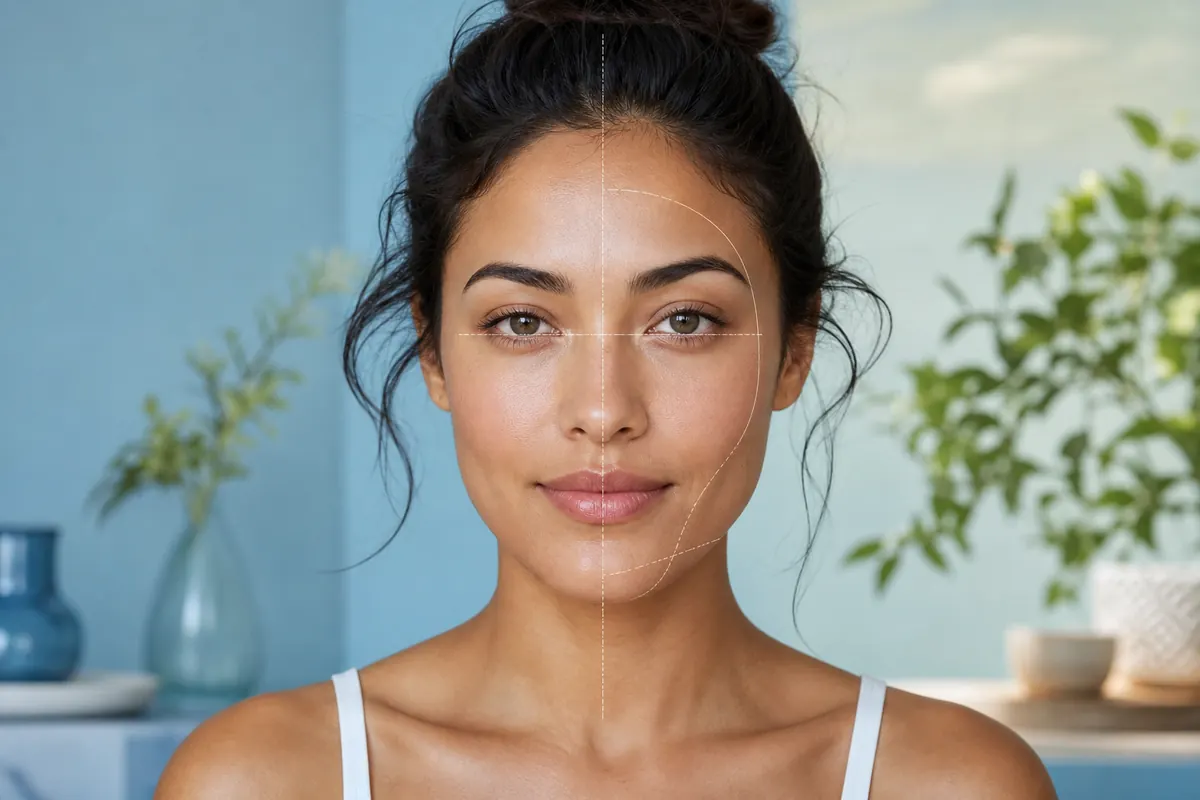
A close selfie with harsh side light may make one cheek, eye, or jawline look uneven even when your face is stable. A long-standing bite issue, jaw tension, or skin-volume difference may need a dentist, orthodontist, dermatologist, or physician to explain realistic options. Sudden drooping, numbness, weakness, or speech trouble should be treated as urgent, not as cosmetic.
The safest approach is to start with reversibility. Correct the photo setup first, compare several neutral portraits, look for timing and symptoms, and only then decide whether the concern is a photo habit, a normal stable feature, or something worth professional assessment.
Safety Note
Public medical resources treat sudden facial drooping or weakness as a possible urgent warning sign. For a plain emergency checklist, see CDC stroke signs.
Can You Actually Fix an Asymmetrical Face?
Sometimes you can improve how facial asymmetry looks. Sometimes you can only make the photo fairer. And sometimes the right answer is not a beauty fix at all, but a medical or dental evaluation. That distinction matters because the phrase how to fix an asymmetrical face mixes very different problems into one search.
A close selfie with harsh side light may make one cheek, eye, or jawline look uneven even when your face is stable. A long-standing bite issue, jaw tension, or skin-volume difference may need a dentist, orthodontist, dermatologist, or physician to explain realistic options. Sudden drooping, numbness, weakness, or speech trouble should be treated as urgent, not as cosmetic.
The safest approach is to start with reversibility. Correct the photo setup first, compare several neutral portraits, look for timing and symptoms, and only then decide whether the concern is a photo habit, a normal stable feature, or something worth professional assessment.
Photo-only asymmetry
Often improves with distance, centered framing, even light, and a relaxed expression.
Stable natural asymmetry
May simply be normal facial variation that looks stronger in mirrored or flipped images.
Functional asymmetry
Jaw pain, bite changes, tooth loss, or movement limits deserve professional evaluation.
Sudden change
New drooping or weakness is a medical warning sign, not an online beauty problem.
Step-by-Step: What to Try First
A useful fix sequence moves from low-risk and reversible to more specialized. Do not start with exercises, fillers, or procedures just because a photo looks uneven. Start by proving that the unevenness remains under fair conditions.
If the same pattern appears in several neutral photos and it bothers you, the next step depends on where the asymmetry seems to come from. Lower-face asymmetry may involve bite, jaw, tooth, or muscle patterns. Skin-volume changes may belong with a dermatologist or cosmetic clinician. Sudden movement changes belong with medical care.
1. Retake the photo correctly
Use eye-level framing, step back, crop later, use soft front light, keep the head level, and relax the mouth.
2. Compare repeatable portraits
Look at two or three similar photos rather than one mirrored selfie or one harsh-angle image.
3. Separate structure from expression
Check whether the difference appears at rest, only when smiling, or only when one side is tense.
4. Check function and timing
Jaw pain, bite changes, numbness, weakness, new drooping, or rapid change are more important than a beauty score.
5. Choose the right professional path
Dental, orthodontic, dermatology, cosmetic, physical therapy, or medical care may be relevant depending on the cause.
Fixes That Help Photos vs Fixes That Change the Face
Many quick fixes for an asymmetrical face are really photo fixes. They can make a picture look more balanced without changing facial structure. That is not a bad thing. If your concern is a profile photo, dating app image, or headshot, better photo geometry may solve the actual problem.
Structural changes are different. Orthodontics, dental restoration, jaw treatment, skin treatments, fillers, surgery, and rehabilitation all depend on individual anatomy and goals. They require a qualified assessment because the wrong fix can create new imbalance, cost, or risk.
| Option | Best for | Important limit |
|---|---|---|
| Photo setup | Selfies, lighting, head tilt, profile photos | Improves the picture, not the underlying face. |
| Styling and expression | Brows, hair, smile tension, camera presentation | Useful for photos but not a medical or structural fix. |
| Dental or orthodontic care | Bite, tooth loss, jaw alignment questions | Requires exam and personalized treatment planning. |
| Skin or volume treatments | Scars, volume loss, texture, cosmetic balance | Benefits and risks depend on anatomy and clinician skill. |
| Medical care | Sudden weakness, drooping, numbness, pain, injury | Do not delay with online beauty advice. |
How to Take a Fair Asymmetry Check Photo
A fair check photo should be boring and repeatable. Stand or sit straight, place the camera at eye level, move the phone farther away than a normal selfie, and crop after the shot. Keep both ears or shoulders similarly positioned if visible. Use soft light from the front, not a window on one side.
Do not use beauty filters, face reshaping, strong portrait blur, or a dramatic expression. If you use a mirror, remember that the mirrored version can feel more familiar than the camera version. The goal is not to find the most flattering angle. The goal is to remove distortions before judging asymmetry.
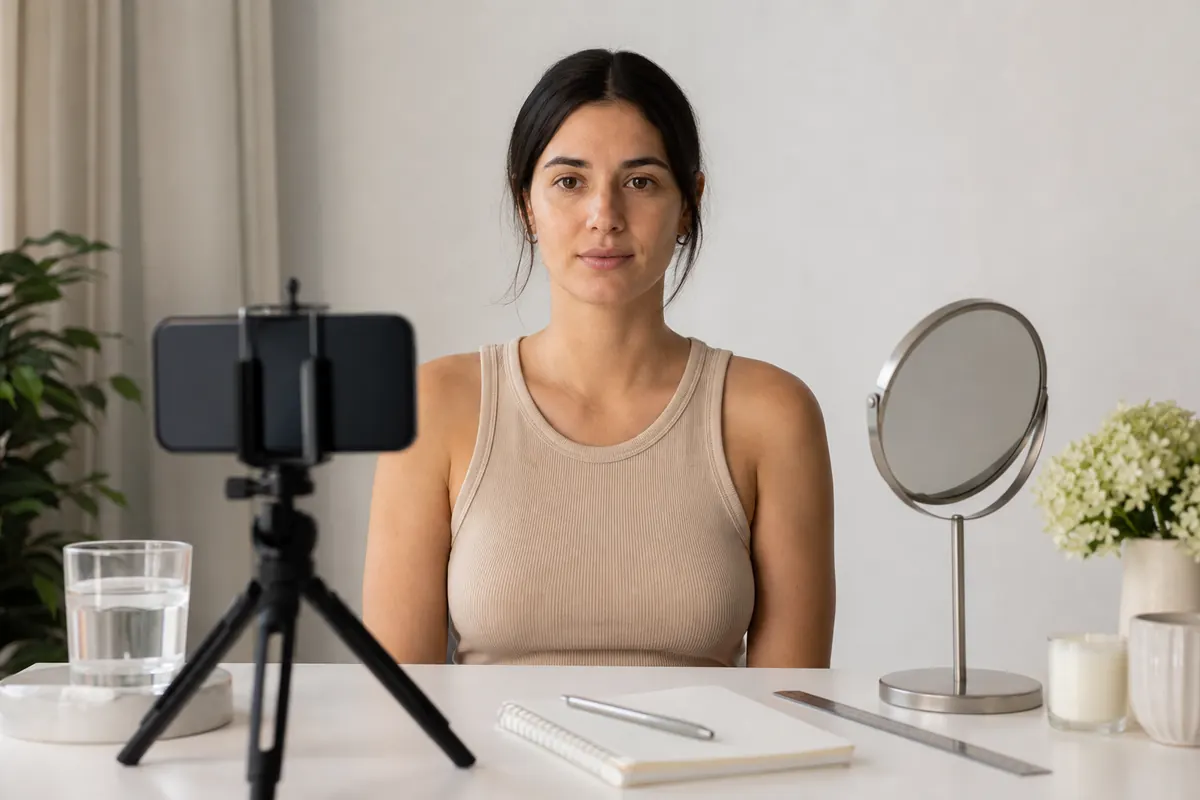
- Distance: Step back to reduce wide-angle enlargement of the nose, midface, and near cheek.
- Level camera: Keep the lens at eye height so one side is not artificially raised or lowered.
- Front light: Use even light to avoid shadows that mimic cheek, eye, or jaw imbalance.
- Neutral expression: Relax the jaw, lips, brows, and eyes before comparing left-right movement.
- Repeatability: Retake the same setup on another day before assuming one photo proves a problem.
- No edits: Avoid filters and face reshaping when you want a real comparison.
When Not to Try to Fix It Yourself
Some asymmetry concerns should skip home fixes. Sudden facial drooping, weakness, numbness, trouble speaking, arm weakness, confusion, severe headache, new eye-closing trouble, injury, or rapidly worsening swelling are not photo problems. They need urgent or professional care.
Be especially cautious with facial exercises after new weakness or pain. Exercises may be useful in some rehabilitation plans, but they should be guided by a clinician when nerve function, jaw pain, or sudden movement changes are involved.
Get help first if you notice
- New one-sided face drooping or weakness
- Speech trouble, arm weakness, confusion, dizziness, or severe headache
- New numbness, pain, swelling, injury, or inability to close one eye
- Jaw locking, bite changes, tooth loss, or persistent TMJ pain
- A rapid change that family or friends also notice
Which Professional Might Help?
If the asymmetry is stable but still bothers you, the right professional depends on the pattern. A dentist or orthodontist may help with bite and tooth-related imbalance. A dermatologist or cosmetic clinician may discuss skin texture, volume, or non-surgical options. A physician should evaluate sudden or unexplained weakness, pain, or neurological symptoms.
A symmetry score can help you describe what you see, but it should not choose treatment for you. Bring neutral photos, explain when the difference began, and describe any function changes. That gives a professional better information than a single AI score.
-
Dentist or orthodontist
Bite changes, missing teeth, jaw alignment questions, or lower-face imbalance. -
Physician or urgent care
Sudden drooping, weakness, numbness, pain, injury, or speech changes. -
Dermatologist or cosmetic clinician
Skin texture, volume loss, scars, fillers, or non-surgical cosmetic options. -
Physical therapist or specialist
Clinician-guided rehabilitation after diagnosed facial weakness or jaw dysfunction. -
Photographer or styling help
Headshots, profile images, and camera-angle issues rather than structural concerns.
How Different Options Compare
Not every option changes the same thing. Some improve the image. Some improve function. Some change soft tissue or dental structure. The most sensible choice is the least risky option that matches the real cause.
Use this table as a decision map, not a treatment recommendation. It helps separate low-risk photo adjustments from options that deserve professional planning.
| Path | What it can address | Best first step | Limit |
|---|---|---|---|
| Photo correction | Lens distortion, side shadows, head tilt | Retake a neutral portrait | Does not change real structure |
| Habit and expression awareness | Tension, uneven smile habit, posing | Relaxed repeatable photos | Not a treatment for weakness |
| Dental or jaw assessment | Bite, jaw pain, tooth position, lower-face balance | Dentist or orthodontist visit | Can require time, cost, and imaging |
| Cosmetic consultation | Volume, skin texture, scars, soft-tissue balance | Qualified clinician consult | No universal result or zero-risk option |
| Urgent medical care | Sudden drooping, weakness, speech trouble, injury | Emergency or clinical evaluation | This is not a beauty-tool question |
Privacy Before Uploading Face Photos
Face photos are sensitive data. If you use an AI symmetry tool or face rating app while researching fixes, check how the service handles uploads, deletion, model training, third-party processing, and account linkage.
For a personal asymmetry concern, avoid uploading medical-looking photos, children's photos, or someone else's face without consent. A local mirror, a phone camera, or a trusted professional may be safer for sensitive cases.
Privacy rule
Do not upload a face photo to a tool that does not clearly explain storage, deletion, and data use.
Storage
Look for whether images are deleted quickly or retained.
Training
Check whether uploads can be used to train models.
Third parties
Know whether another AI provider processes the photo.
Consent
Use your own photo and avoid uploading minors or other people without permission.
Research and Limits
Mild facial asymmetry is common, and online appearance advice often overpromises. Medical sources describe facial asymmetry as a broad topic with cosmetic, dental, developmental, injury-related, and neurological causes. That is why a responsible guide should not claim one universal fix.
The biggest practical limit is that a photo cannot show everything. It cannot fully assess bite, nerve function, jaw mechanics, pain, progression, or medical risk. Use online tools for photo context, then use professional care for function, sudden changes, or treatment decisions.
- Penn Medicine facial asymmetry overview: Explains that facial asymmetry can involve cosmetic, dental, injury-related, and medical causes. Penn Medicine.
- CDC stroke signs: Lists sudden face drooping, arm weakness, and speech trouble as emergency warning signs. CDC.
- Mayo Clinic Bell's palsy: Describes sudden facial muscle weakness and why clinical evaluation matters. Mayo Clinic.
Final Thoughts
The best way to fix an asymmetrical face starts with the least dramatic explanation. Retake the photo well, compare repeatable portraits, and notice whether the concern is stable, expressive, structural, or sudden. Many scary-looking selfie differences shrink once the camera is farther away and the light is even.
If the asymmetry is stable and cosmetic, you can explore photo technique, styling, dental questions, skin or volume options, or professional cosmetic advice with realistic expectations. If it is new, painful, weak, numb, or functional, do not treat it as a beauty project. Get care first.
A face symmetry test can be a useful mirror with context. It can help you see patterns across photos. It cannot diagnose the cause or promise a fix. Use the score as one clue, not the final decision.
Start with the least invasive explanation
If asymmetry appears only in one selfie, fix the setup first. If it is new, painful, functional, or rapidly changing, use professional care before online appearance advice.
Try the Face Symmetry Test