Why Does My Face Look Asymmetrical in Photos?
A camera can exaggerate small left-right differences. Learn how mirroring, distance, perspective, lighting and pose change what you see.
Written by Face Symmetry Editorial Team
Quick answer
Your face may look more asymmetrical in photos because the image is not the version you see most often. A front camera may mirror its preview, a close selfie changes perspective, and small shifts in angle or light can make one side look wider, higher or darker. One photo is not a diagnosis or a reliable measure of permanent facial asymmetry.
Most faces have some natural left-right difference. In everyday life, other people see a moving, three-dimensional face from changing distances. A photograph removes that movement and compresses one angle, one expression and one instant into a flat frame.
That is why a picture can feel surprisingly uneven even when nobody notices anything unusual in person. Before judging your appearance, separate stable facial structure from the temporary effects of the camera and the conditions under which the image was made.
Why the mirror and camera version feel different
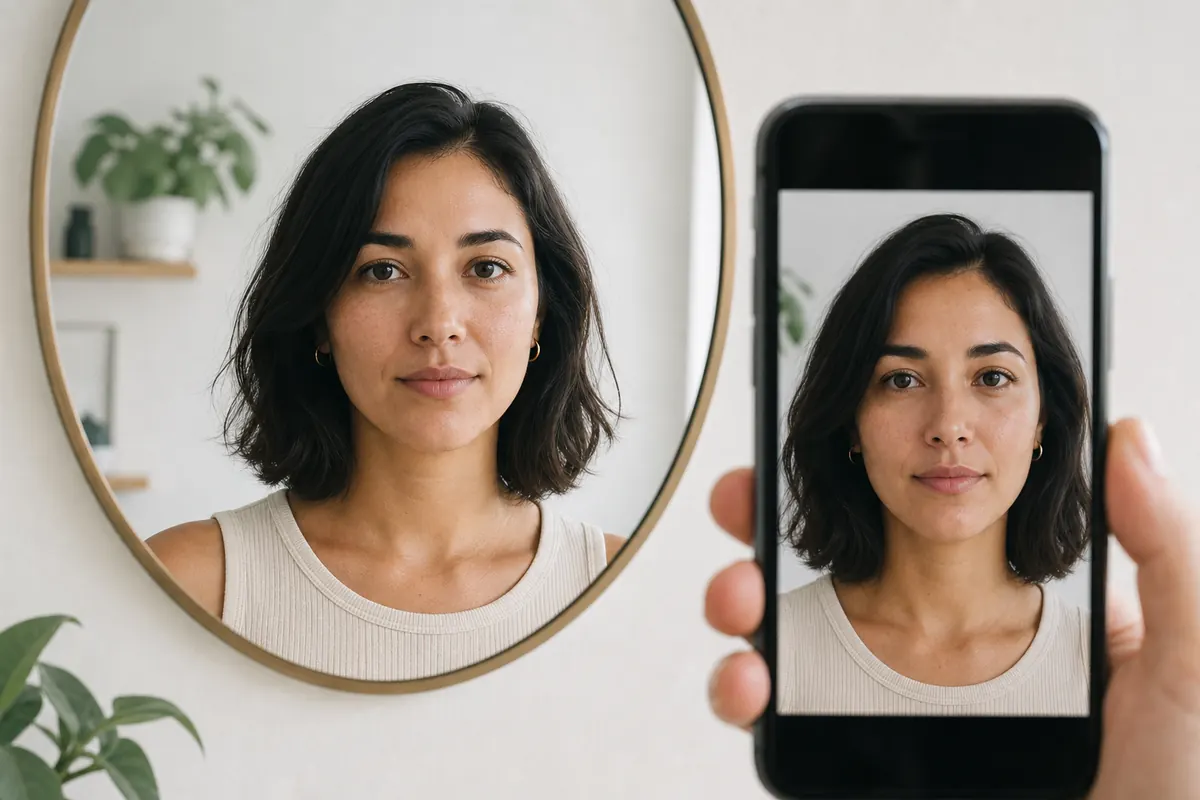
You usually see your face as a mirror image. Over years, that reversed arrangement becomes familiar: the hair part, eyebrow height, smile direction and tiny differences between the cheeks all appear in their expected places. A standard photograph may show the non-mirrored arrangement, so the same differences appear on the opposite side and feel stronger simply because they are unfamiliar.
Some phone apps mirror the live preview but save an unmirrored file. Others keep the mirrored version. Neither is the single true view: real people see you in motion, from many angles, rather than as a frozen mirror or selfie.
Camera distance changes facial proportions
Perspective is controlled mainly by camera-to-face distance. When a phone is held very close, the parts nearest the lens appear larger relative to features farther away. The nose and near cheek can look more prominent, while the far side may appear smaller. If the phone is slightly off-center, this can look like facial asymmetry.
A modeling study of selfie distortion found substantial apparent changes at typical short selfie distances compared with portraits taken farther away. The practical lesson is to step back, use a timer or tripod, and crop later. More distance reduces perspective exaggeration; no lens creates a perfect medical record.
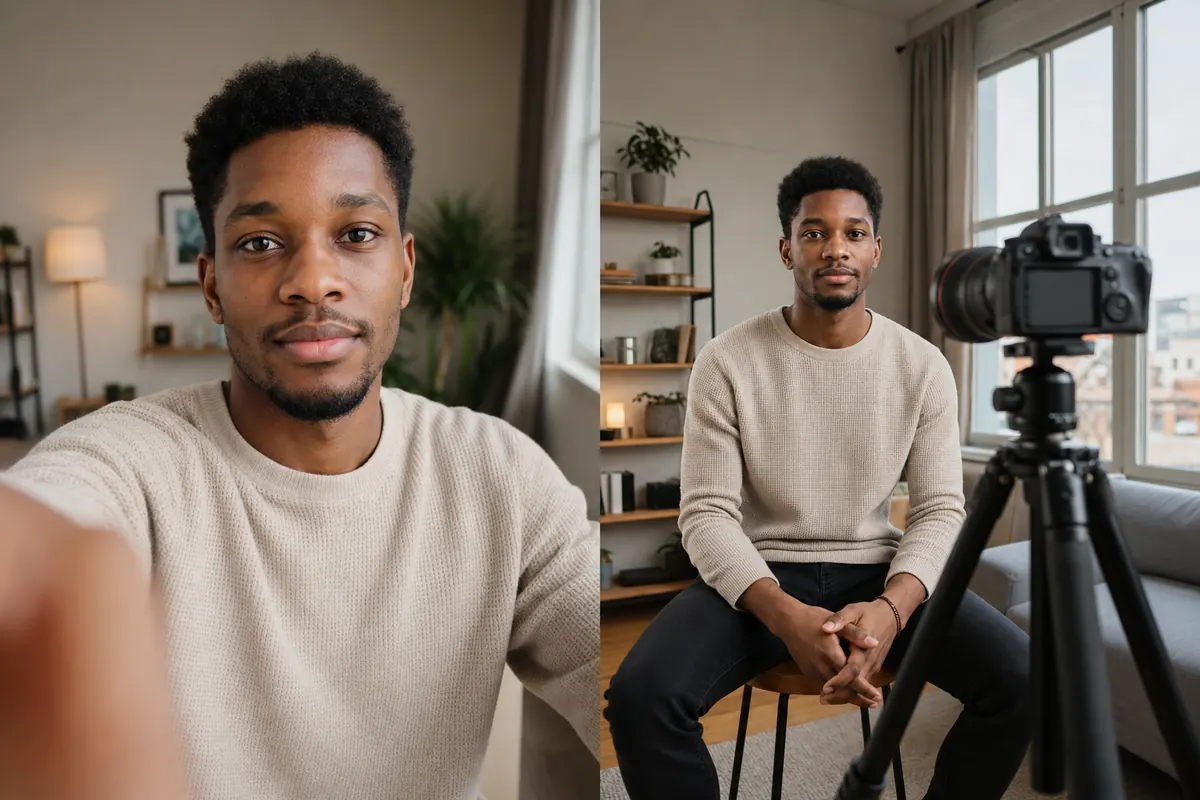
Photo conditions that can exaggerate asymmetry
| Factor | What it can change | Fair check |
|---|---|---|
| Head angle | A few degrees of turn makes the nearer side look larger and shifts the apparent jawline. | Center the nose and keep both ears similarly visible. |
| Camera height | A high or low camera changes eye, nose and chin proportions. | Place the lens near eye level. |
| Side lighting | Shadow can make one eye look smaller or one cheek look deeper. | Face soft, even frontal light. |
| Expression | A half-smile or raised eyebrow creates temporary asymmetry. | Relax the jaw and take several frames. |
| Phone processing | Beauty filters or portrait correction may alter edges unevenly. | Turn filters off and compare the original file. |
How to take a more reliable comparison photo
Use standardized conditions if you want to compare photos over time or run a face symmetry test. Consistency matters more than finding a supposedly perfect angle.
- Step back. Place the camera about 1.5 to 2 meters away and crop afterward instead of using a close selfie.
- Use eye-level framing. Keep the lens level with the eyes, the head upright and the nose centered.
- Choose even light. Use soft frontal daylight and avoid a strong lamp from one side.
- Keep a neutral expression. Relax the mouth, eyebrows and jaw, then take three to five photos.
- Compare like with like. Use the same camera, distance, orientation and lighting on each date.
Do other people notice the asymmetry you see in photos?
Usually they do not see it in the same way. People combine movement, speech, eye contact, expression and changing viewpoints. Those cues reduce the importance of a tiny difference that becomes obvious only when you zoom into a still image.
Attention also matters. Once you notice one eyebrow or one side of the jaw, you may repeatedly search for it. Look at normal viewing size and compare several neutral photos before concluding that everyone else sees the same thing.
When facial asymmetry is more than a photo effect
Long-standing mild asymmetry is common, but a photo guide cannot determine its medical cause. Speak with a clinician or dentist if asymmetry is new, worsening, painful, follows an injury, or affects chewing, speech, vision or facial movement.
The bottom line
A face can look asymmetrical in photos without becoming more asymmetrical in real life. The most common reasons are unfamiliar orientation, close camera distance, off-center perspective, uneven lighting, a slight head turn and a frozen expression.
For a fairer view, step back, use even light, keep the camera at eye level and compare several unfiltered images. Treat symmetry results as visual estimates, not medical or beauty verdicts.
Frequently asked questions
Is the mirror or camera more accurate?
Each is limited. A mirror reverses left and right, while a photo freezes one lens position and moment. Real-life appearance is three-dimensional and moving.
Why does one side of my face look bigger in selfies?
The phone may be close or slightly off-center, so the nearer side is enlarged by perspective. Step back, center the camera and crop later.
Can a front camera make facial asymmetry look worse?
Yes, through short distance, wide framing, mirroring behavior and processing. The camera does not permanently change your face.
Should I flip my selfie to see what others see?
An unmirrored image is closer to the left-right orientation seen by others, but it remains a flat, frozen view.
Can a face symmetry test diagnose a health problem?
No. It can compare visible landmarks, but it cannot diagnose neurological, dental, muscular or skeletal conditions.
References
Related guides and tools
Face Symmetry Test
Compare left-right landmarks using a standardized portrait.
Asymmetrical Face Guide
Understand common types and causes of facial asymmetry.
How Symmetrical Is My Face?
Learn how symmetry scores work and what they cannot tell you.
How to Fix an Asymmetrical Face
Review cautious options and warning signs.