Face Symmetry Filter vs Real Analysis: What the Mirror Changes
A practical guide to mirrored face filters, camera perspective, facial symmetry tests, and the difference between an interesting visual effect and a meaningful measurement.
Sarah Mitchell
Beauty-tech writer covering face analysis tools, camera effects, privacy, and digital self-image.
Sarah writes practical explainers about photo-based analysis. Her work focuses on helping readers separate a useful visual clue from an overconfident score, especially when a camera or filter changes how a familiar face appears.
This guide treats filters and symmetry scores as visual tools, not as beauty verdicts or medical assessments. The goal is to explain what each method can show and where its interpretation should stop.
At a Glance
- Filter: Creates a mirrored or edited version of one photo so differences are easy to notice.
- Analysis: Compares visible landmarks, alignment, proportions, or image signals against a defined method.
- Big variable: Camera distance, lens perspective, head tilt, light, expression, and cropping can change the reading.
- Best habit: Use a filter as an observation prompt and compare similar unedited photos before drawing conclusions.
Compare the Question You Actually Have
If you want a visual mirror effect, use the filter. If you want left-right feedback from a consistent photo, use a symmetry test and read its limits.
A face symmetry filter is designed to make a visual difference obvious. It takes one portrait, keeps one side of the face, mirrors that side across a center line, and shows you a new version of the face. The result can look strangely familiar or surprisingly different. That reaction is normal, because the filter is not showing the same face from another angle; it is showing a constructed image in which one half has been repeated.
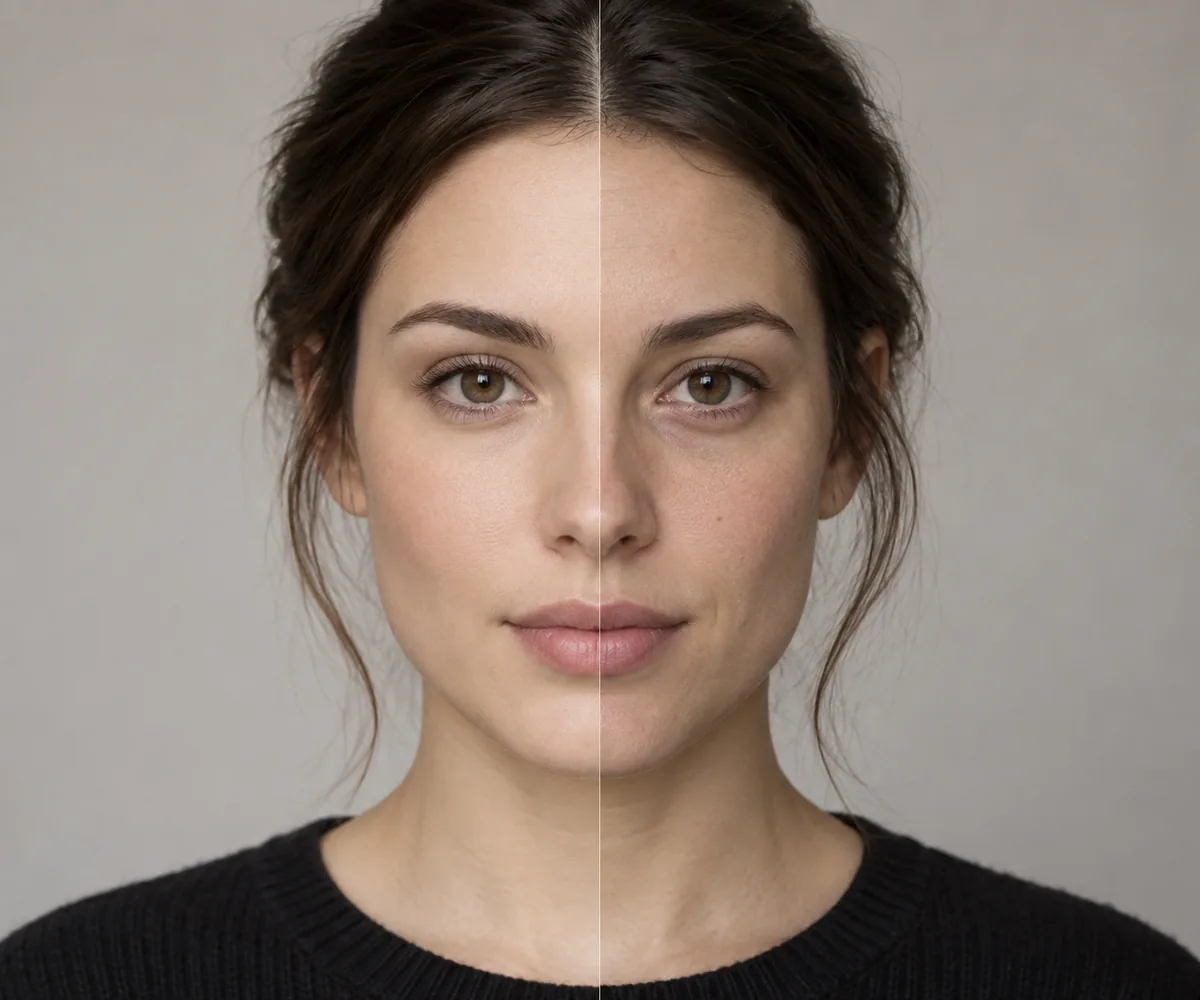
The short answer is that a face symmetry filter is an exploration tool, while real facial symmetry analysis is a measurement process. A filter can help you notice how the eyes, nose, mouth, jaw, and hairline differ from left to right. It cannot tell you, by itself, whether the difference is large in real life, important to other people, or caused by your facial structure rather than the camera.
This guide explains why mirror-half images feel more dramatic than ordinary photos, how camera distance and perspective can exaggerate asymmetry, what an online facial symmetry test usually measures, and how to make a fair comparison without turning one image into a verdict about your appearance.
The Key Distinction
A filter changes the image so that a difference is easier to see. An analysis tries to describe a relationship in the image using a stated method. The two views can complement each other, but they should not be treated as interchangeable scores.
What a Face Symmetry Filter Actually Shows
Most face symmetry filters use a simple visual operation: choose a vertical center line, crop the left or right half of a portrait, flip it, and place the mirrored half beside or over the original. That operation preserves the lighting, expression, skin texture, and lens perspective from the source photo, but it removes the ordinary differences between the two sides. The result is an intentionally artificial face that is easy to compare with the original.
This is valuable because human perception is not good at comparing two sides of a face while the face is moving or changing expression. A mirror-style preview freezes the question. You can inspect whether one eyebrow sits higher, whether the nose points slightly off-center, whether one corner of the mouth pulls upward, or whether the jawline is hidden by hair. Those are observations, not diagnoses, and the center line itself may need adjustment when the head is tilted.
Useful questions to ask
Use the filter to ask what changed in the image, not whether one version is the correct version of you.
- Which landmarks move most when the left half is mirrored?
- Does the difference remain in a straight, evenly lit portrait?
- Could hair, shadow, head tilt, or expression explain the visual change?
- Am I comparing the same crop and center line on both sides?
Why Mirrored Half-Face Images Feel So Dramatic
Everyday faces contain small differences. One eye may open a little more, one cheek may catch more light, and one side of the jaw may have a slightly different curve. In a natural portrait those differences are mixed with movement, depth, hair, and expression. When a filter mirrors one half, it repeats the same differences in a perfectly regular pattern. Your brain notices the repetition immediately, so a small asymmetry can feel much larger than it did in the original image.
The effect also changes identity cues. A real face is three-dimensional and constantly seen from changing angles, while a mirrored image is a flat, repeated arrangement. A face that looks more balanced in the mirror preview is not automatically more attractive, and a face that looks unusual is not automatically less balanced in real life. The filter is showing what happens when one side becomes the template for the whole composition.
The comparison trap
People often compare the most flattering natural photo with the most surprising mirrored version. That is not a controlled comparison. Keep the crop, lighting, expression, and center line consistent, and remember that the mirrored result is a visual experiment rather than a second photograph of your face.
Face Symmetry Filter vs Real Analysis
The phrase real analysis can sound more authoritative than it is. An online symmetry test still works from a photograph, and the photograph contains camera and lighting variables. What makes it an analysis is not that it reveals a perfect truth; it is that the tool defines a repeatable input, a set of landmarks or image features, and a rule for turning those features into feedback.
A good comparison therefore starts with purpose. A filter is best when you want to see a mirrored version, inspect visual differences, or experiment with a left-half and right-half composition. A symmetry analysis is better when you want a consistent estimate of left-right alignment and a written explanation of what may have affected the result. Neither method can measure personality, presence, movement, cultural preference, or personal worth.
| Method | What it does | Best question | Main limit |
|---|---|---|---|
| Face symmetry filter | Mirrors one half of a photo | What changes when one side is repeated? | It creates a new image and can amplify small differences. |
| Manual mirror check | Lets you compare a photo, mirror, or split crop | Can I inspect the same landmarks on both sides? | The result depends on the crop, center line, and viewer judgment. |
| Online symmetry test | Uses a stated scoring or landmark method | How balanced does this photo read under one method? | The estimate is still affected by the image and model assumptions. |
| Professional assessment | Uses clinical or specialist context when needed | Is there a functional or sudden change that needs attention? | It is not the same as a beauty score or casual filter. |
Camera Perspective, Light, and the Face You See
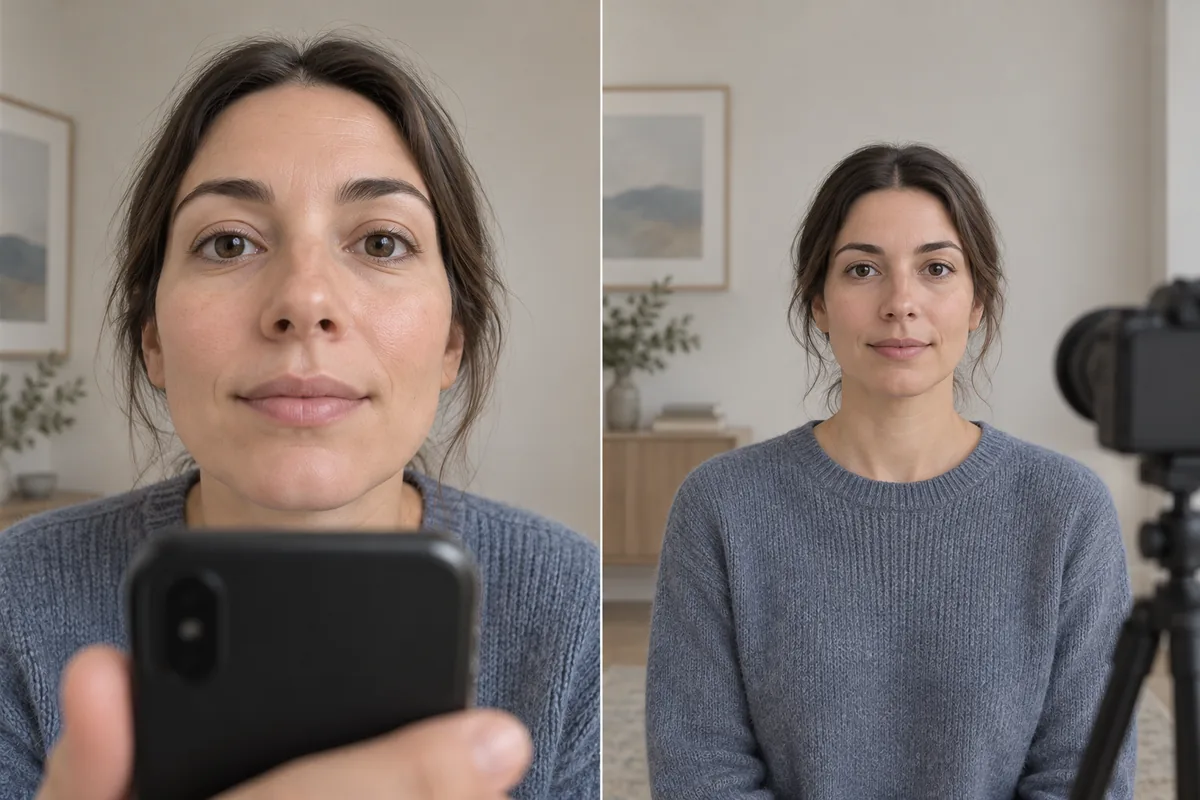
A close selfie can make the center of the face look larger because the nose and nearby features are physically closer to the lens than the ears and sides of the jaw. A wide-angle phone camera can make that relationship feel stronger. Moving the camera farther away and using a modest zoom usually creates a less exaggerated perspective, although it does not turn the photo into a perfect measurement. This is why two photos of the same person can produce different impressions before any filter is applied.
Light adds another layer. Side lighting can make one cheek, eye socket, or jaw edge appear deeper than the other side. A head tilt changes the apparent height of the eyes and corners of the mouth. Hair can hide a jawline, and a smile can move the mouth more on one side. When a filter mirrors the image, those lighting and expression patterns are mirrored too, so a camera artifact can become part of the dramatic effect.
A simple photo reset
Before comparing a new result with an old one, retake the photo from eye level, step back from the lens, use soft front light, keep the head level, remove strong filters, and keep a relaxed expression. The goal is not to create a perfect face; it is to reduce variables so that a change is easier to interpret.
How to Compare Photos More Fairly
The most reliable comparison is not one perfect portrait. It is a small set of similar portraits made under similar conditions. Take two or three images with the same camera distance, background, head position, and expression. Then inspect the original photo, the mirrored preview, and any symmetry score together. If a difference appears only in one close selfie, treat it as a photo clue first. If it repeats across several neutral images, it may be a more stable visible pattern, but it still does not tell you how noticeable it is in motion or conversation.
Keep your interpretation descriptive. Say that one eyebrow appears higher in this image, or that the light makes one jaw edge look stronger. Avoid turning a single score into a label such as perfect, bad, or abnormal. Facial symmetry is one part of facial appearance, and ordinary asymmetry is present in nearly every face. A careful reading is more useful when it leaves room for photo conditions and normal variation.
A five-step check
- Start with an unedited, front-facing photo.
- Check the camera distance and head position before the face itself.
- Compare eyes, nose, mouth, jaw, and hairline separately instead of judging the whole image at once.
- Repeat the test with one similar photo before deciding that a pattern is stable.
- Use the result as context for a question, not as a final statement about your appearance.
What an Online Symmetry Test Can and Cannot Tell You
An online face symmetry test organizes visible feedback from a specific image. Depending on the tool, it may compare landmark positions, estimate left-right balance, describe alignment, or show a score range. It gives you a repeatable starting point; the method and explanation matter more than one number.
It cannot measure how your face looks while speaking, how expressions change balance, what viewers prefer, or whether a difference is structural when perspective, uneven light, blur, compression, or pose affects the photo. Read the output as photo-based feedback with a boundary.
Look for these trust signals
- The tool explains the input photo conditions and does not promise an objective beauty grade.
- The result separates visible observations from interpretation and uses cautious language.
- The page explains storage, deletion, third-party processing, and permission before upload.
- The tool lets you retest a similar image instead of encouraging endless score chasing.
When to Stop Comparing and Get More Context
A filter or score is not a good reason to keep checking the same photo for hours. If repeated comparisons make you more anxious, take a break and return later, or ask someone you trust whether the difference is visible in ordinary conversation rather than in a zoomed-in crop. The more tightly you inspect a still image, the more likely you are to notice details that other people do not use when they recognize your face.
If you notice a sudden facial change together with weakness, numbness, speech trouble, severe pain, or another urgent symptom, a beauty tool is the wrong place to investigate it. Seek appropriate medical help. For ordinary appearance questions, use the filter and the symmetry test as limited visual aids, then return to the larger context: the photo conditions, the repeated pattern, and how you actually feel and function day to day.